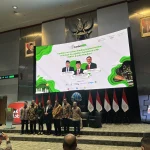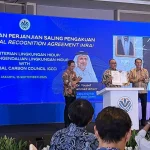

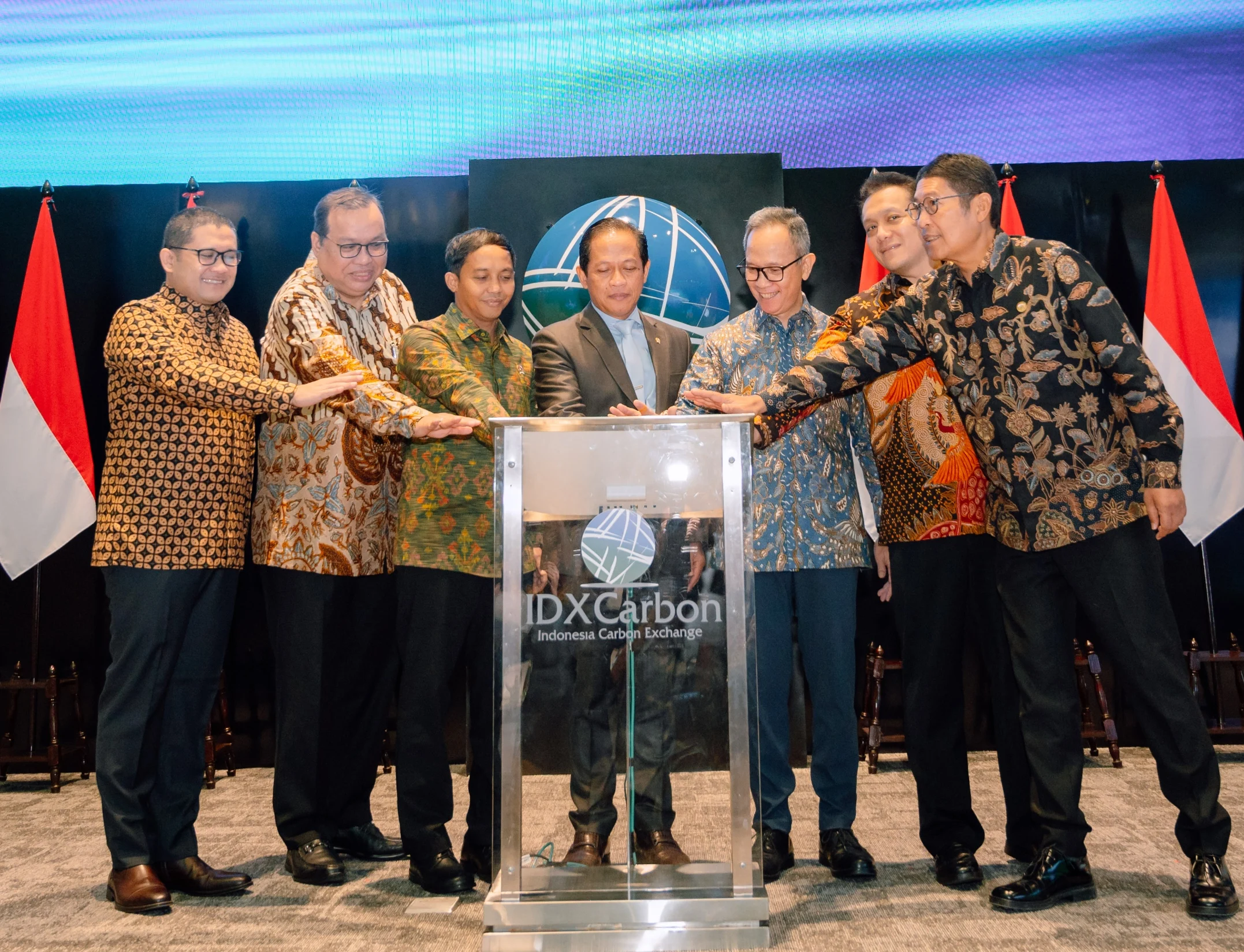
Indonesia’s carbon market is beginning to take a central role in global carbon trading, balancing domestic policy goals with international climate finance potential. With vast tropical forests and peatlands, Indonesia holds one of the world’s richest carbon reserves. The country officially launched its carbon market in September 2023 through IDXCarbon, though it remains in the early stages of development.
What is a Carbon Market?
A carbon market is a trading mechanism that allows companies or countries to buy and sell carbon credits certificates representing the reduction of greenhouse gas emissions (Ferdiansyah et al., 2025). One credit typically equals one ton of CO₂e (carbon dioxide equivalent) reduced. The aim is to provide an economic incentive for emissions reduction and accelerate the transition to a low-carbon economy.
A Dual Path: Compliance and Voluntary Markets
Globally, carbon markets are divided into two types:
-
Compliance Market
Operates under government regulation. Companies are given an emission cap. If they exceed it, they must buy carbon credits or pay a tax. The most established example is the European Union Emissions Trading System (EU ETS).
-
Voluntary Market
Operates on a voluntary basis. Companies purchase credits to meet net-zero targets, CSR programs, or sustainability reputation goals. This market is more flexible, with credit quality depending on certification and verification standards.
Both mechanisms complement each other. Compliance markets provide legal certainty, while voluntary markets expand participation and access to climate finance.
Indonesia’s Carbon Market
Indonesia officially launched IDXCarbon in September 2023. With extensive tropical forests and peatlands, the country holds one of the largest carbon reserves globally, creating major opportunities to become a key global player.
The compliance market is designed through a cap-and-tax scheme (SPE-GRK), projected to start in 2025 with initial coverage of coal-fired power plants. This mechanism combines emission limits with incentives for companies to transition to more efficient technologies.
The voluntary market is already operating through IDXCarbon, enabling companies to purchase credits voluntarily, whether for CSR programs or preparation for future compliance requirements.
This dual-track approach mirrors international trends, with governments setting regulatory frameworks while the private sector takes voluntary initiatives.
IDXCarbon: A Defining Early Stage
As a two-year-old exchange, IDXCarbon still records limited trading activity. This is normal for a market building its institutional foundation, standards, and trust. Carbon credit prices are around IDR 69,600/ton (~US$4.5), relatively low compared to international averages.
Going forward, voluntary market use is expected to grow, alongside clearer integration with compliance mechanisms. Strong government backing for IDXCarbon is a vital asset for credibility and broader business participation.
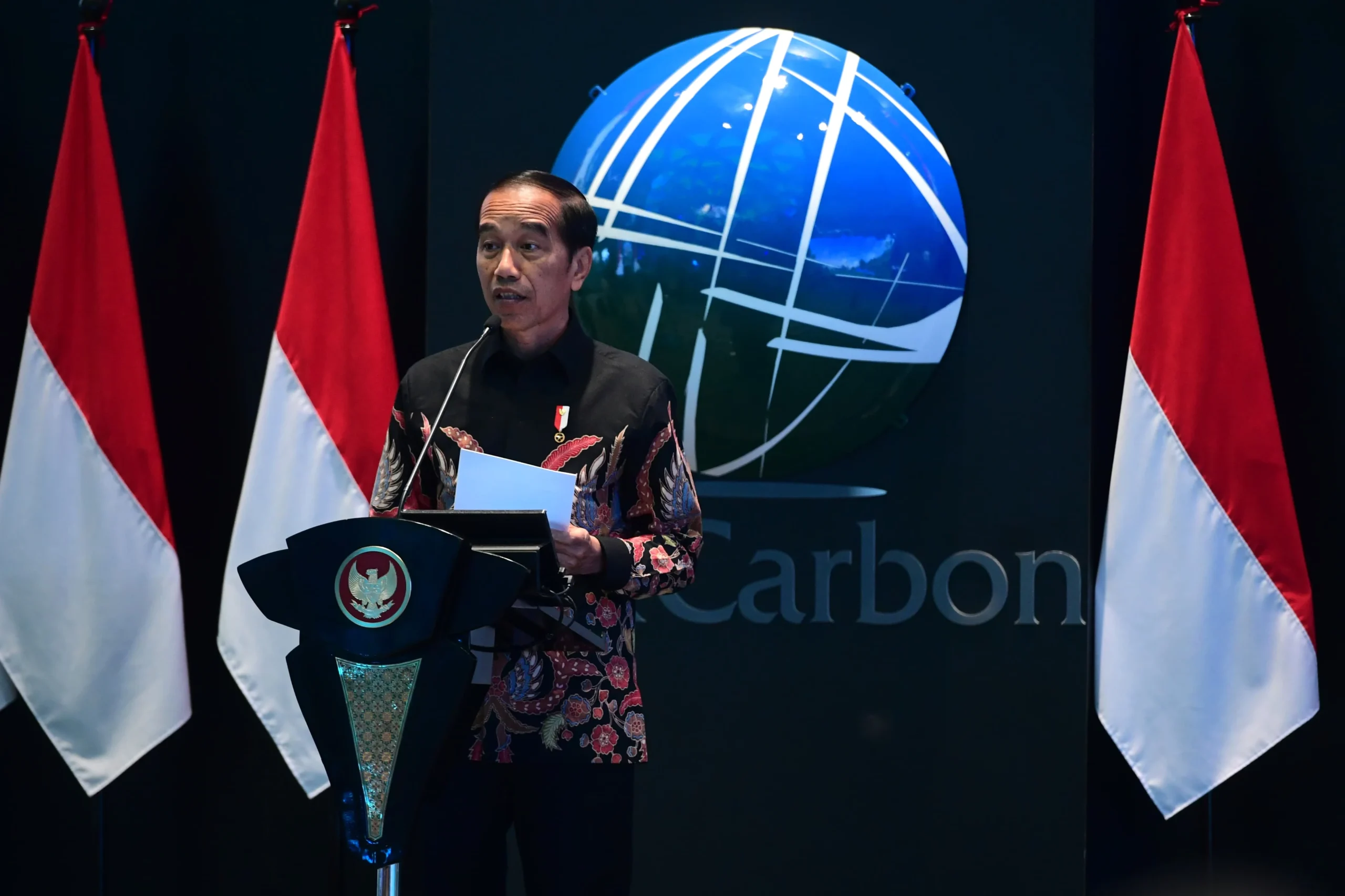
Foto: Sekretariat Negara
Balancing Exports and Sovereignty
Indonesia’s carbon market has been shaped by the government’s protective approach toward its carbon resources. In 2022, international carbon credit exports were temporarily halted to prioritize domestic framework building. The moratorium was lifted in early 2025, but REDD+ carbon trading (historically contributing 78% of Indonesia’s carbon supply) remains restricted until safeguard mechanisms are finalized.
The compliance market began to open in May 2025, when Indonesia signed an agreement recognizing Gold Standard-certified projects, allowing high-quality credits to enter the national registry.
Timeline of Indonesia’s Carbon Market Development
- 2022: Market formation with international export moratorium, supported by Presidential Regulation 98/2021 and MOEF Regulation 21/2022, which laid the groundwork for cap-and-trade and carbon tax mechanisms (though the tax was delayed until 2025).
- 2023: The compliance market gained legal certainty through the Financial Sector Law (Law 4/2023), recognizing carbon credits as financial instruments. OJK issued trading regulations, and former President Joko Widodo launched IDXCarbon on September 26. Credits priced around US$4.5/ton, while MOEF Regulation 7/2023 established REDD+ safeguards.
- 2024: The voluntary market faced stricter enforcement, including the revocation of Rimba Raya REDD+’s license. Meanwhile, compliance markets advanced through international cooperation, including an MoU with South Korea and a Mutual Recognition Agreement under Article 6.2 with Japan at COP29.
- 2025: Moratorium lifted, Letters of Authorization (LoA) for Article 6 credits issued, and international trading began on IDXCarbon. Prices rose to US$5.8–8.8/ton. Agreements with Gold Standard and Norway expanded credibility. By mid-2025, forestry and nature-based credits were listed on IDXCarbon.
- 2026–2028: Compliance markets projected to integrate with the UN’s Article 6.4 mechanism by 2026, enabling global credit sales. By 2027, a full cap-and-trade system covering multiple sectors, alongside a carbon tax, will be enforced. By 2028, the government targets US$65 billion mobilized from carbon finance, full REDD+ safeguard operations, and IDXCarbon as a regional hub.
Global Partnerships and Ambitions
Global comparisons provide perspective on Indonesia’s trajectory:
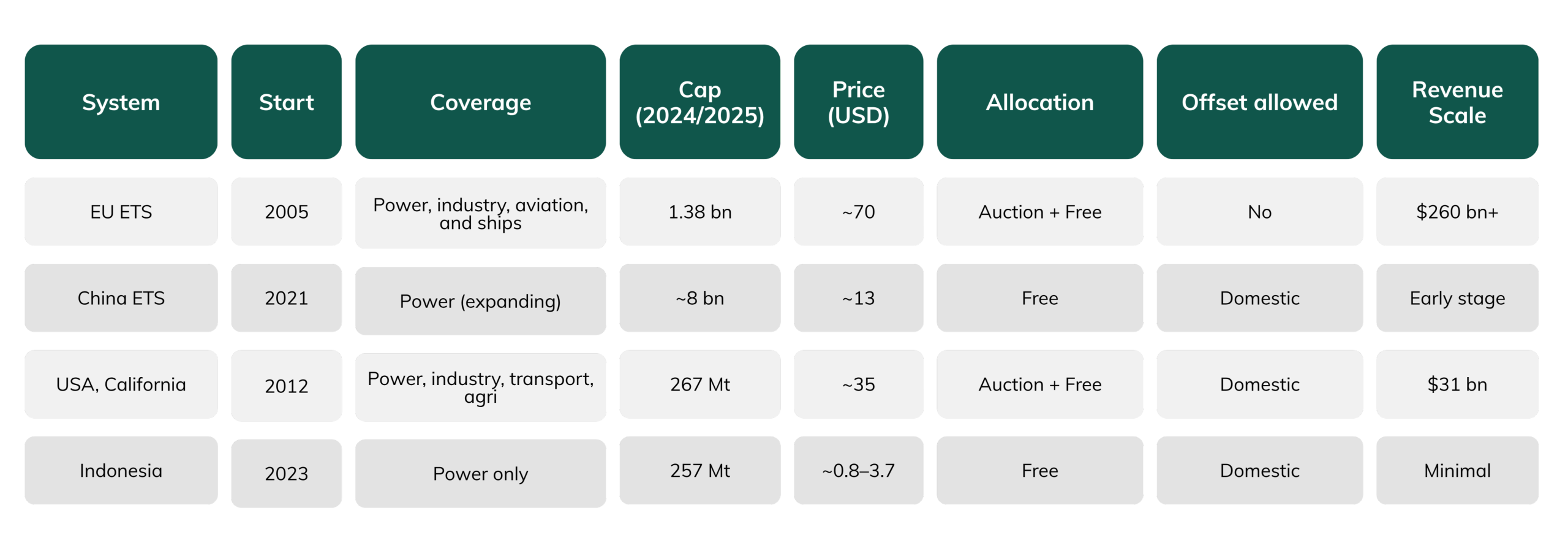
Indonesia’s compliance market is still nascent, covering only the power sector with free allocations. Prices (US$0.76–3.7) are far below the EU ETS (~US$70), California (~US$35), or China (~US$13). The voluntary market permits offsets, similar to China and California, unlike the stricter EU ETS. Indonesia could become more competitive by expanding sectoral coverage, shifting to auctions, and integrating with global markets under Article 6.
Looking Ahead
The success of Indonesia’s carbon market will depend on credibility and inclusivity. The government now mandates benefit-sharing schemes to ensure local and Indigenous communities gain from projects addressing past criticisms. The compliance market will rely on clear regulations and strong enforcement. The voluntary market will hinge on quality assurance and international recognition.
Indonesia’s carbon market now stands at a crossroads. Managed wisely, it could channel billions of dollars into ecosystem restoration and rural development. Mismanaged, it risks weak governance and greenwashing. Today, the attention is fixed on Jakarta. The balance between voluntary and compliance markets will determine whether IDXCarbon becomes a credible regional hub or remains stuck in a state of slow growth.
Planning to enter the carbon market? We are here to help with the carbon project from project identification to carbon credit sales. Let’s collaborate!