
Article 6.4 Paris Agreement Crediting Mechanism (PACM) is a centralised, UN-governed system for issuing carbon credits that any country can host and use. It is the successor to the Clean Development Mechanism (CDM), the crediting system built under the 1997 Kyoto Protocol, which is now being wound down.
The first Paris Agreement Crediting Mechanism credits were approved for issuance in late February 2026 (UNFCCC), with 603,368 tCO2e available on issuance (Fastmarkets). Reporting on the issuance approval noted it produced fewer credits than the same activity would have generated under CDM accounting, around 40%. It’s a direct result of stricter baseline rules.
For Indonesian project developers, the question is no longer whether to understand international carbon markets, but how to prepare projects that can meet increasingly demanding technical, regulatory, and governance requirements. This article explains how Article 6.4 Paris Agreement Crediting Mechanism works, where it sits within the international carbon market, what makes a project eligible, and what the transition means for projects built in Indonesia.
Why Is Article 6.4 Becoming the New International Carbon Project Pathway?
Carbon markets under the Paris Agreement are consolidating around a single rulebook. The Kyoto Protocol split the world into countries with emission targets and countries without, and CDM was designed for that two-tier structure. The Paris Agreement replaced the split: every country now sets its own Nationally Determined Contribution (NDC). A mechanism built for the old world no longer fit, so Article 6.4 was written to replace it.
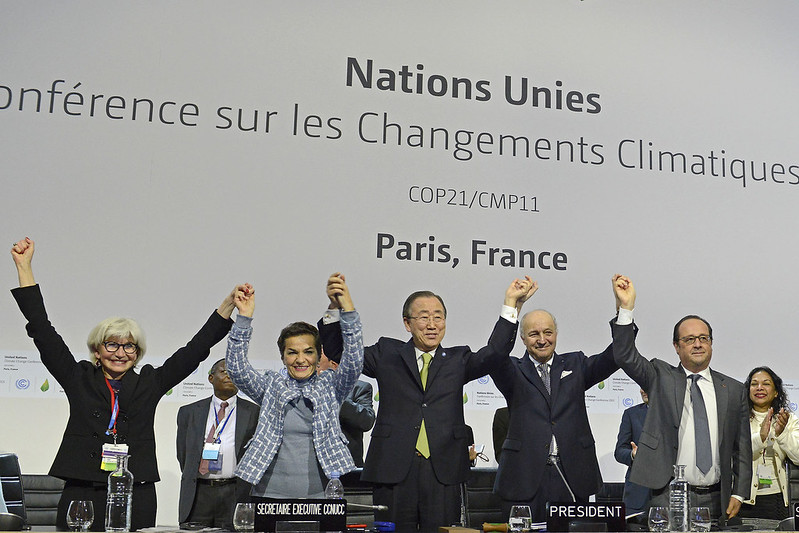
The operating rules were finalised at COP29 in Baku in November 2024, which adopted standards for methodology requirements and carbon removals, with further standards on additionality, baselines and leakage adopted by the Supervisory Body through 2025. That gave the mechanism the one thing a market needs before it can function: a rulebook buyers can trust. Demand is now moving toward credits that carry those integrity features, because corporate buyers and their auditors screen harder for permanence and additionality than they did five years ago.
For developers, the practical signal is timing. PACM methodologies are still being published, and host-country authorisation processes are still maturing. Projects designed now, against the new rules, will be ready to issue when the infrastructure catches up. Projects designed against retired assumptions will not.
From CDM to Article 6.4 Paris Agreement: A Brief Transition
CDM was created under the Kyoto Protocol to let industrialised countries meet targets by funding emission-reduction projects in developing countries. It issued Certified Emission Reductions (CERs) and, over two decades, registered thousands of projects. It also drew persistent criticism on two fronts: additionality (whether a project would have happened anyway) and over-crediting from baselines set close to business as usual.
Article 6.4 keeps the project-based logic but tightens the integrity rules. There are two changes that matter most. Baselines now face a downward adjustment, meaning the business-as-usual scenario a project is measured against must bend toward the Paris temperature goal rather than sit at historical emissions. And approaches that lock in emissions are excluded as a route to proving additionality. Both make credits harder to earn and, in principle, more credible.
For a new project, the practical takeaway is direct: understanding current Article 6.4 requirements matters more than relying on historical CDM approaches. A CDM methodology does not automatically carry over, and a CDM-era baseline may no longer pass.
How Does Article 6.4 Paris Agreement Carbon Market Work?
PACM is governed by Article 6.4 Supervisory Body (SBM), a UN body that approves methodologies, accredits auditors, and registers activities. A project moves through five stages.
Project Design and Eligibility
A developer designs the activity against an approved Paris Agreement Crediting Mechanism methodology and secures host-country approval. New projects are expected to use new PACM methodologies rather than legacy CDM ones, and that library is still being built. The first approved PACM methodology covers flaring or use of landfill gas and was approved in 2025. The SBM has prioritised renewable energy and energy efficiency methodologies next, reflecting where the CDM transition pipeline is concentrated.
Validation and Registration
An accredited independent body validates the project design against the methodology and the integrity rules. The SBM then registers the activity. To keep issuance moving while permanent infrastructure is completed, the SBM launched an interim registry in early 2026.
Monitoring, Reporting, and Verification (MRV)
The developer monitors actual results, reports them, and an independent verifier confirms them before any credit is issued. This is the discipline behind every credible carbon standard: measure what happened, document it, and have someone independent check it. For a closer look at how monitoring underpins credit quality, see TruCarbon’s MRV service (TruMRV).
Carbon Credit Issuance and Registry
Once results are verified, the SBM issues units known as A6.4ERs (Article 6.4 Emission Reductions) and records them in the mechanism registry. The registry is what makes each credit traceable from issuance to retirement, which is central to preventing the same tonne being sold twice.
Authorization and International Transfer
If the host country authorises those units for use toward another country’s NDC or in international markets, it applies a corresponding adjustment: it adds the transferred tonnes back to its own emissions balance so the reduction is not counted twice. That adjustment is the mechanical heart of Article 6 integrity. A credit that is not authorised cannot carry a corresponding adjustment, and without that adjustment, it cannot be sold as an Article 6 international credit.
What Makes a Carbon Project Eligible Under Article 6.4 Paris Agreement Mechanism?
Eligibility under Article 6.4 Paris Agreement Crediting Mechanism is a gate, not a formality. Five requirements decide whether a project can be issued.
Environmental Integrity
The reductions or removals must be real, additional, permanent, and independently verified. Baselines that inflate the counterfactual, or activities that simply shift emissions elsewhere, do not pass.
Additionality Requirements
The project must demonstrate that the emission outcome would not have happened without the crediting revenue. Article 6.4 tightens this test and excludes approaches that lock in emissions as a way of proving it.
Sustainable Development Contributions
Article 6.4 Paris Agreement Crediting Mechanism (PACM) requires that activities contribute to the host country’s sustainable development, with reporting against its own criteria. This is a formal requirement in the design documentation, not a marketing add-on.
Strong MRV Systems
Every issued credit rests on monitoring data that an independent verifier can confirm. Weak or incomplete data is the most common reason a technically sound project cannot be issued on schedule.
Regulatory Compliance and Authorization
The activity must comply with host-country rules and, for any credit intended for international transfer, secure host-country authorisation. In Indonesia, that authorisation runs through the Ministry of Environment on the recommendation of the relevant sector ministry.
What Does the Transition Mean for Indonesian Carbon Project Developers?
Identifying Suitable Project Opportunities
Indonesia’s peatland, mangrove, and forest assets position it for high-volume nature-based supply, alongside industrial and energy activities. The starting question for any opportunity is whether an approved Paris Agreement Crediting Mechanism methodology already covers the activity type, because that determines whether the project can issue at all.
Selecting Appropriate Methodologies
Because PACM methodologies are still being published, do not assume a CDM methodology carries over unchanged. Track the SBM methodology pipeline and confirm that an approved PACM methodology exists for the activity before committing project design costs.
Preparing Technical Documentation
Article 6.4 raises the bar on documentation: the project design, baseline justification, additionality case, and monitoring plan all face independent scrutiny. Building this evidence base early is cheaper than reconstructing it before a delayed verification.
Aligning Projects With National Regulations
Projects must align with Indonesia’s domestic framework, principally Presidential Regulation No. 110 of 2025 (PR 110/2025) on Carbon Economic Value (Nilai Ekonomi Karbon), and any sector rules that apply, such as forestry regulations.
Accessing International Carbon Markets
Issuing an internationally transferable credit requires host-country authorisation and a corresponding adjustment. That single decision, domestic use versus international transfer, shapes the project’s pricing, its buyers, and its effect on Indonesia’s NDC accounting, so it belongs at the design stage rather than the sale stage.
How Does Article 6.4 Fit Within Indonesia’s Carbon Market?
Relationship With Indonesia’s Carbon Regulations
PR 110/2025 replaced the earlier Perpres 98/2021 and is the current framework governing Carbon Economic Value instruments. Under it, all emission reductions from offsets count toward Indonesia’s NDC unless a corresponding adjustment is issued under UNFCCC rules. Authorisation therefore carries a national accounting cost, which is why the government reviews it rather than granting it automatically.
National Authorization Process
Authorisation for international transfer runs through the Minister of Environment, based on a recommendation from the relevant sector ministry. This is the step that attaches a corresponding adjustment to a credit and allows it to be sold as an Article 6 international unit.
The Role of SRUK
PR 110/2025 introduced the Carbon Unit Registry System (Sistem Registri Unit Karbon, SRUK) as the dedicated platform for carbon unit data and transactions. The older National Registry System (Sistem Registri Nasional Pengendalian Perubahan Iklim, SRN PPI) is now used for reporting mitigation and adaptation actions rather than for trading.
Potential Interaction With IDXCarbon
IDXCarbon, Indonesia’s national carbon exchange launched in September 2023, is being integrated with SRUK. The financial regulator OJK has begun connecting the exchange to the national registry to track issuance, transfer, and surrender, including internationally transferred mitigation outcomes under Article 6.
Domestic Versus International Carbon Market Pathways
An Indonesian credit can stay in the domestic system, sold through the national registry and IDXCarbon, or be authorised for international use under Article 6. The corresponding adjustment is the switch between the two, and it determines whether the tonne still counts toward Indonesia’s own NDC.
What’s Next for Article 6.4 and Indonesia’s Carbon Market?
Several threads are worth watching. The SBM is continuing to publish methodologies and is moving from the interim registry toward permanent infrastructure. Renewable energy and energy efficiency methodologies are being finalised first, with nature-based methodologies developing behind them.
The CDM-to-PACM transition is being managed through a sequence of UNFCCC deadlines that have been extended more than once as host countries work through their pipelines. Of the more than 1,500 CDM activities that requested transition, only a fraction have so far secured the host-country approval needed to move across, a reminder that eligibility to transition is not the same as a completed transfer. Developers holding legacy CDM assets should confirm the current status and deadlines on the UNFCCC Article 6.4 site before assuming a project has carried over.
For Indonesia specifically, participation is likely to grow through both bilateral Article 6.2 cooperation and a PACM host role, and demand for high-integrity credits carrying a corresponding adjustment is likely to command a premium as buyers screen harder.
Develop an Article 6.4 Paris Agreement Project
Success under Article 6.4 depends on two alignments at once: meeting the international rules set by the SBM, and meeting Indonesia’s own authorisation and registry requirements under PR 110/2025. For companies and investors, understanding how the two interact is now part of basic due diligence when evaluating a carbon project.
Getting from an Article 6.4 concept to an issued credit follows the same sequence this article has described: confirm that an approved PACM methodology covers the activity, design the project against the current integrity rules, build MRV capacity that survives independent verification, and secure host-country authorisation before the first tonne is sold
TruCarbon works across that whole sequence from assessing whether an activity is eligible under current PACM methodologies, structuring the project design and technical documentation, setting up monitoring through our dMRV software (TruMRV), to guiding the authorisation process under Indonesia’s PR 110/2025 so that credits can reach the market they were built for. For developers and investors, that means knowing early whether a project is viable and what it will take to issue.
If you are evaluating or developing a carbon project and want to understand how it maps to Article 6.4, contact us, and our team will get back to you shortly.
Frequently Asked Questions
- What is Article 6.4 PACM?
Article 6.4 PACM (the Paris Agreement Crediting Mechanism) is a centralised, UN-governed carbon crediting system created under Article 6.4 of the Paris Agreement. It replaces the Kyoto Protocol’s Clean Development Mechanism (CDM) and issues credits, called A6.4ERs, once a project’s emission reductions or removals are independently verified.
- What does PACM stand for?
PACM stands for Paris Agreement Crediting Mechanism. It is the operational name for the crediting system established under Article 6.4 of the Paris Agreement. - Is CDM being replaced by Article 6.4 Paris Agreement Crediting Mechanism?
Yes. The Clean Development Mechanism is being wound down, and the Article 6.4 Paris Agreement Crediting Mechanism is its successor. Eligible CDM projects can request transition into PACM, subject to deadlines set by the UNFCCC. - What is the main difference between CDM and Article 6.4 Paris Agreement Crediting Mechanism (PACM)?
CDM operated under the Kyoto Protocol’s split between countries with and without targets. Article 6.4 PACM operates under the Paris Agreement, where every country has an NDC. PACM adds stricter baselines (a downward adjustment toward the Paris goal), tighter additionality rules, and corresponding adjustments to prevent double-counting. - What is a corresponding adjustment?
A corresponding adjustment is an accounting step in which a host country adds transferred credits back to its own emissions balance when those credits are used by another country or in international markets. It ensures the same tonne of reduction is not counted twice. - Can Indonesian projects issue Article 6.4 Paris Agreement credits?
Yes, provided the activity uses an approved PACM methodology and receives host-country authorisation. In Indonesia, authorisation runs through the Ministry of Environment on the recommendation of the relevant sector ministry, and international transfer requires a corresponding adjustment under PR 110/2025. - When were the first PACM credits issued?
The first PACM credits were approved for issuance on 26 February 2026. By applying updated, more conservative values under the new mechanism, the issued volume was about 40% lower than the same activity would have produced under the CDM. - What is the CDM-to-PACM transition deadline?
The original request deadline was the end of 2023, with afforestation, reforestation, and revegetation (ARR) projects given longer. Host-country approval deadlines have since been extended more than once. Because these dates continue to shift, confirm the current cut-off on the UNFCCC Article 6.4 site before relying on a specific one.