
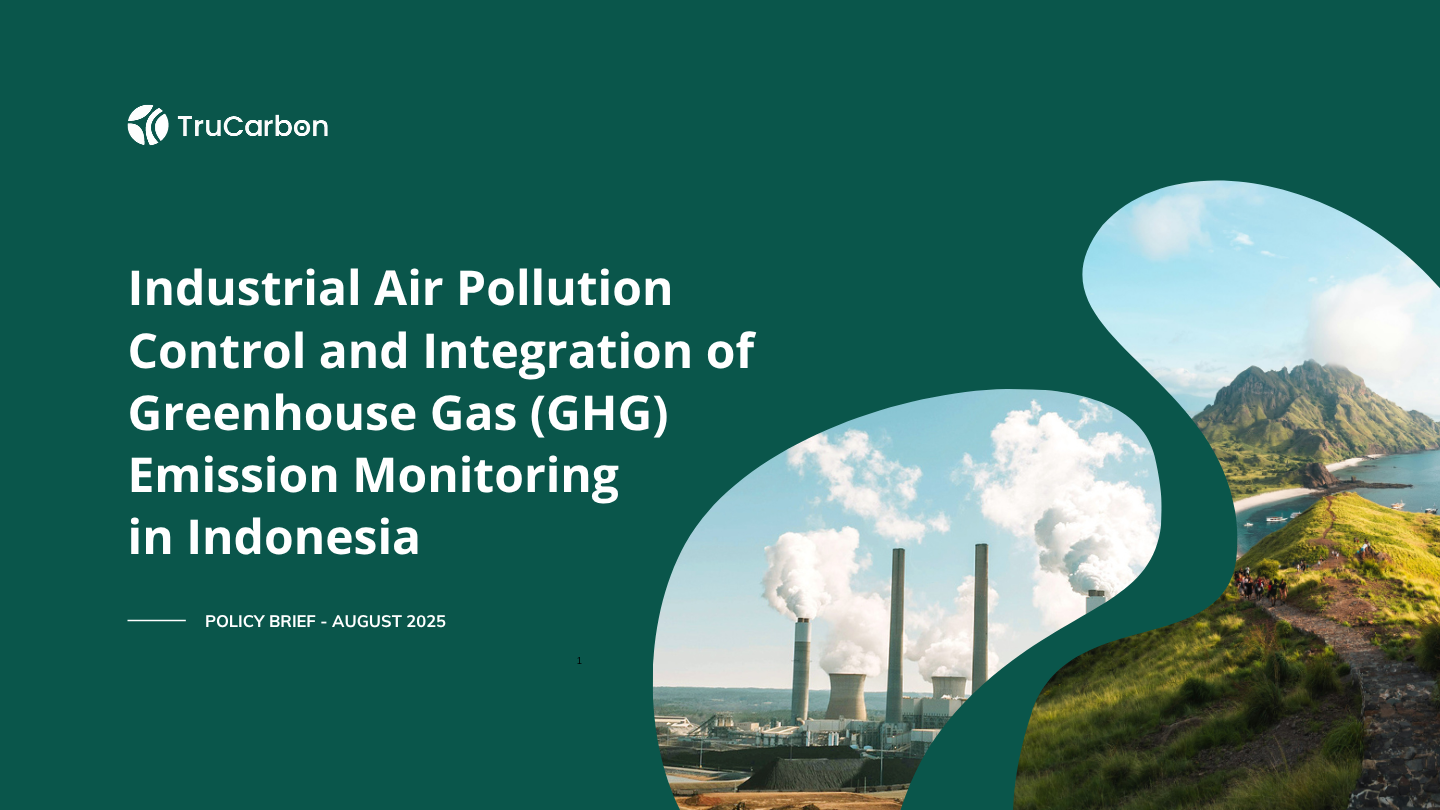
The industrial sector plays a vital role in Indonesia’s economic growth; however, it also contributes significantly to air pollution and greenhouse gas (GHG) emissions, which negatively impact public health and the environment. Cities like Jakarta, Tangerang, and Bandung consistently exceed safe air quality thresholds, with diesel emissions from generator sets (gensets) being a critical but overlooked issue. Emissions such as nitrogen oxides (NOₓ) and fine particulate matter (PM₂.₅) are linked to respiratory diseases, heart conditions, and premature deaths.
In response to these escalating challenges, TruCarbon has developed this policy brief, drawing on scientific evidence and best practices, to offer actionable recommendations for strengthening Indonesia’s industrial air pollution control framework. The foundation of this brief lies in a comprehensive analysis of the gaps in current regulatory approaches. While Indonesia has made strides in environmental policy, much of its legislation is outdated or inadequate to meet the demands of modern industrial operations, particularly with respect to diesel-powered generator sets.
One of the critical issues addressed in the brief is the ambiguous classification of gensets, which are often treated as mechanical machines instead of power generation units. This regulatory oversight leaves a significant gap in emissions monitoring, allowing many high-polluting units to operate without effective accountability.
Our recommendations are based on solid research, including the latest findings on the health impacts of industrial emissions, and are designed to support Indonesia’s broader climate goals. By implementing these measures, Indonesia can reduce its industrial emissions, improve air quality, and accelerate the transition to a low-carbon economy, ultimately protecting public health while fulfilling its climate commitments.
Read the full policy brief to discover our findings and explore the full set of recommendations for a cleaner, healthier future.
Contributors:
Team Leader
Debby Reynata
Researcher
Author: Nada Nisrina Amri, M.Si.
Co-Author: Prof. Dr. Ir. Etty Riani, MS – Professor at IPB University
Advisor
Jaye Marchiandi, PhD – Onco-Metabolomics Team at International Agency for Research on Cancer (IARC) of World Health Organization (WHO)
Bicara Udara Team
Ratna Kartadjoemena
Kristal Amalia
Novita Natalia
Download Attachment